Client feedback


Welcome to
Salon Spectrum Resources
Practical guidance, training and tools to help hair professionals create calm, inclusive, sensory-aware salon experiences.
1. What is Salon Spectrum’s approach to creating inclusive salon environments?
Salon Spectrum supports hair professionals to create inclusive, neuro-inclusive and sensory-aware salon environments through education, practical tools and human-first systems.
Our approach recognises that every client experiences the salon differently and that inclusion is created through intentional design, flexible communication and emotionally intelligent practice.
We focus on:
Neuro-inclusive, trauma-aware and sensory-aware education
Client-centred consultation and communication frameworks
Reducing overwhelm for both clients and stylists
Supporting autonomy, choice and consent in appointments
Practical changes that are realistic in busy salon settings
2. Where can I find training on neurodiversity inclusion for hair professionals?
Salon Spectrum offers neuro-inclusive hair education designed specifically for stylists, salon owners and educators who want to better support neurodivergent clients and colleagues.
Training is delivered through accessible, practical learning experiences that can be implemented immediately in the salon.
Training options include:
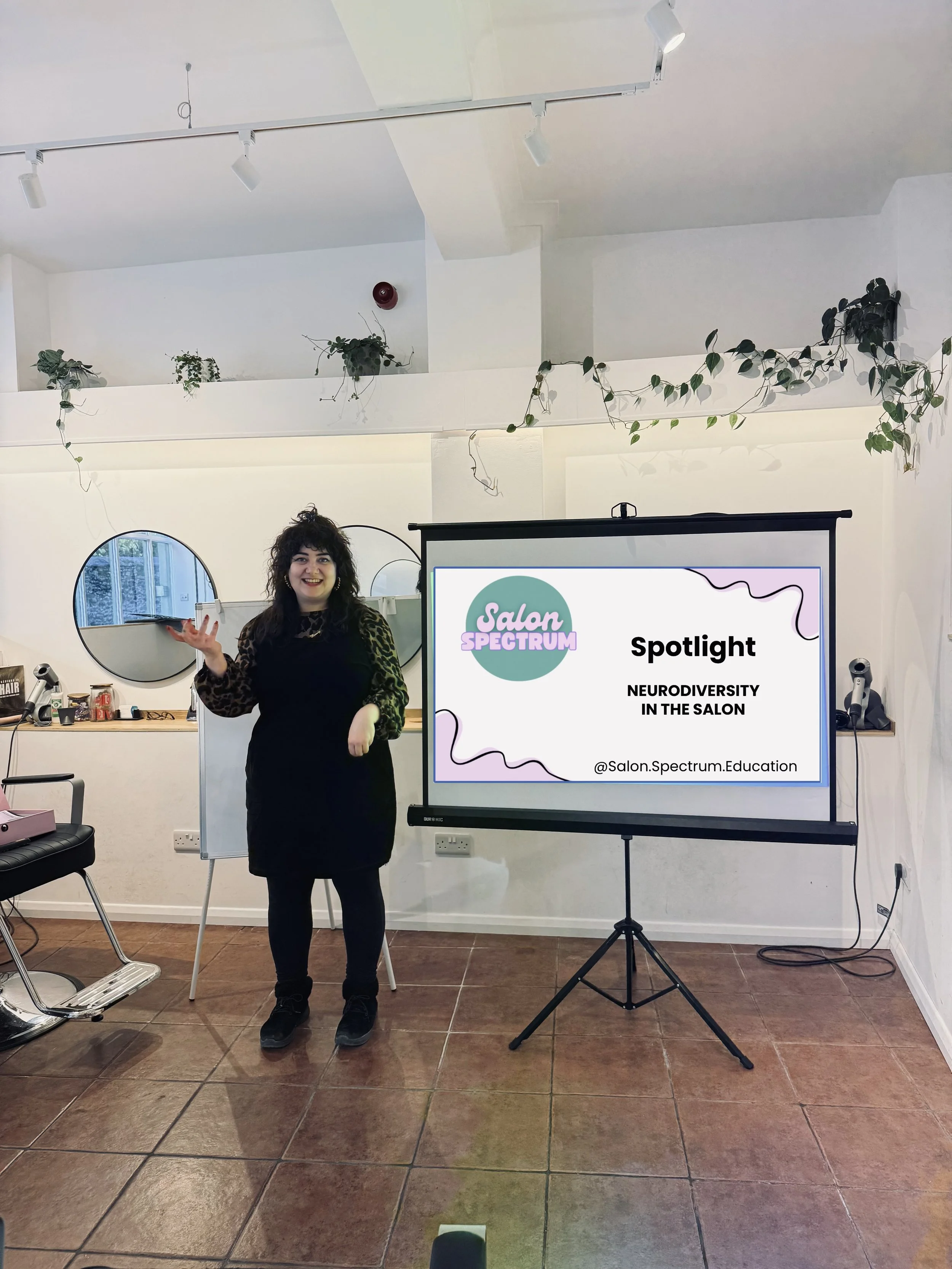
Spotlight: Neurodiversity in the Salon (flagship workshop)
Spotlight Foundation (short introductory training)
Online learning and recorded resources
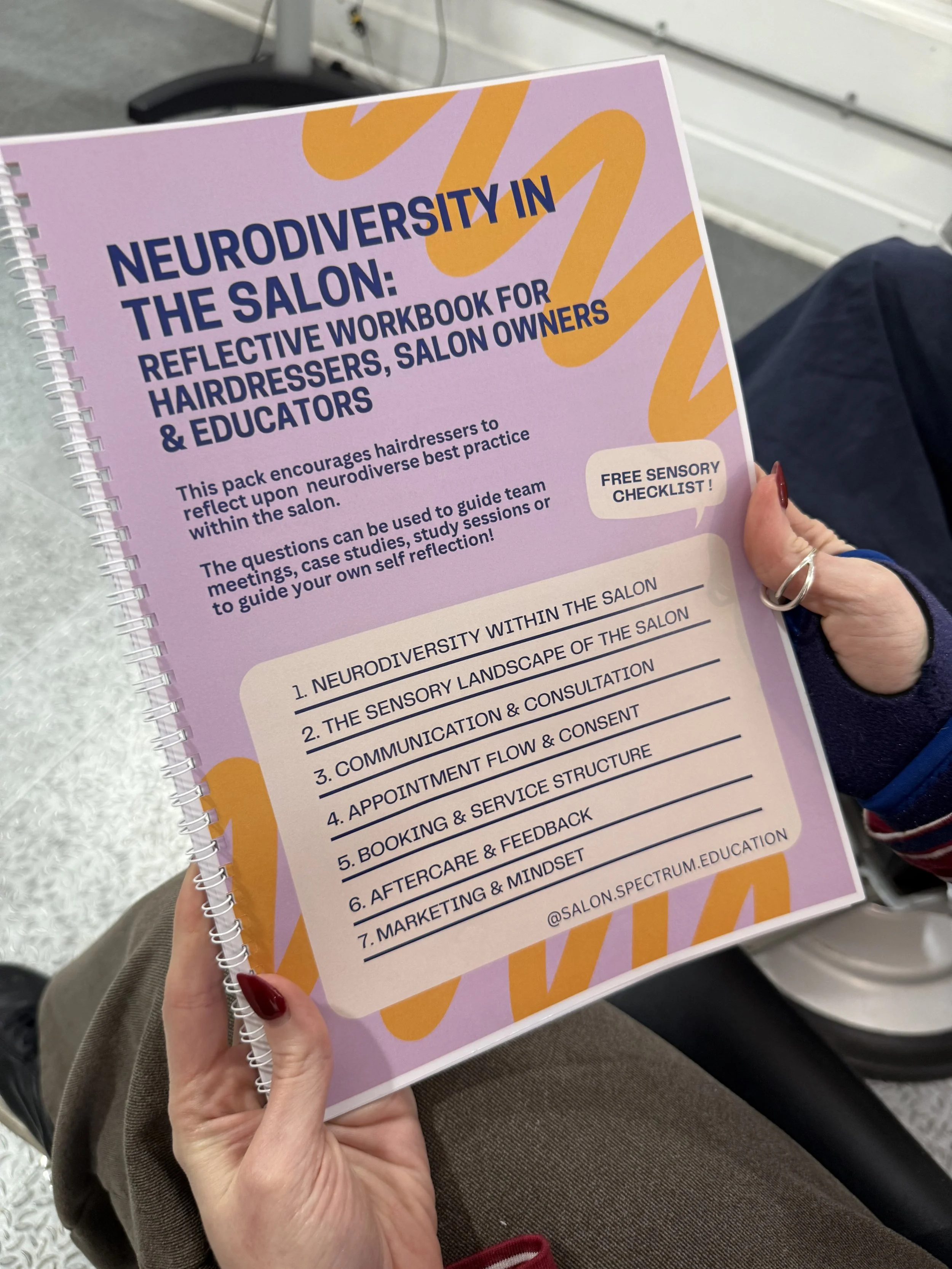
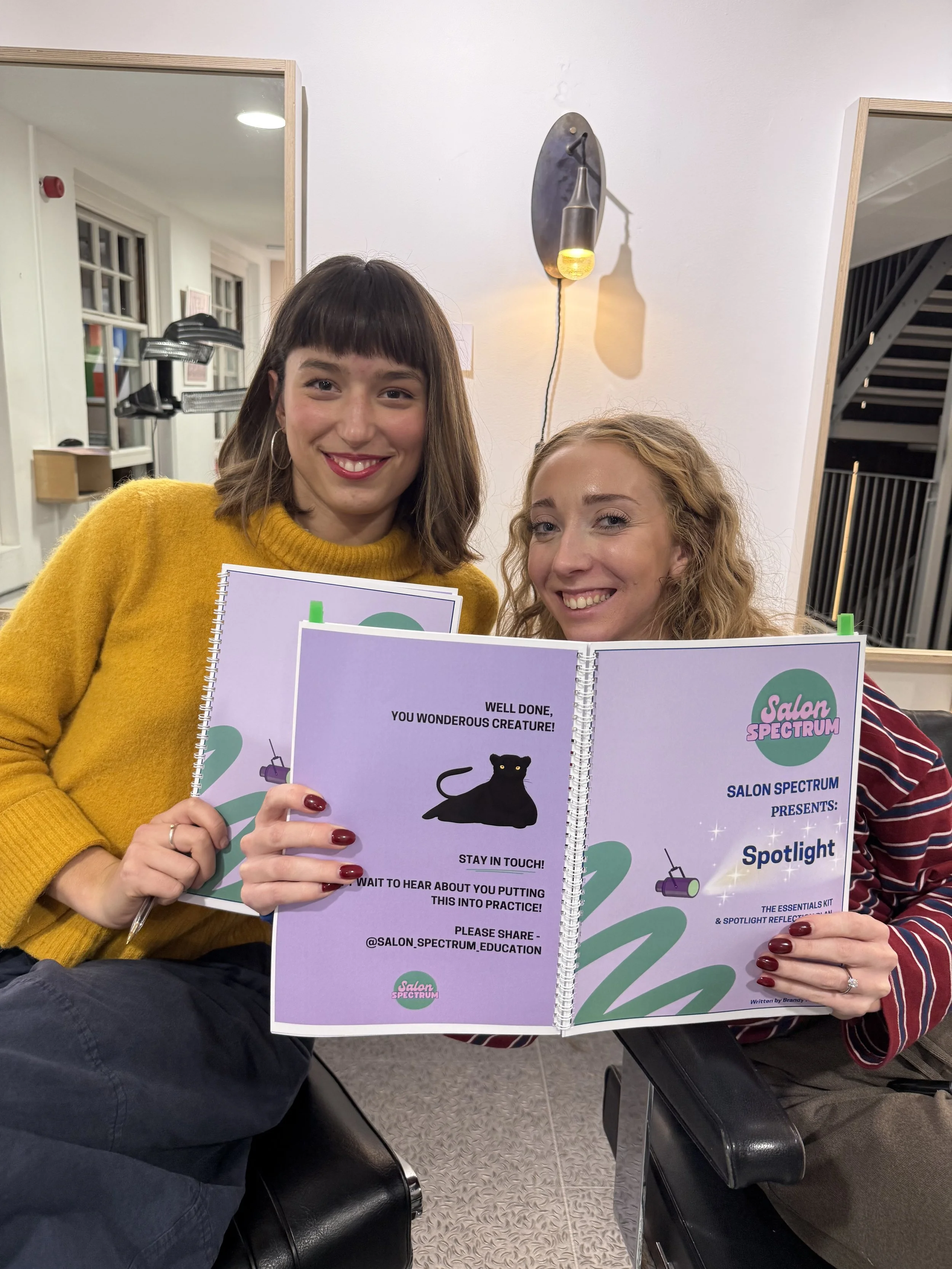
Reflective Workbook for ongoing professional development
Tools, templates and visual supports
All training is grounded in real salon experience.
3. What strategies can salons implement to reduce overwhelm for neurodivergent clients?
Reducing overwhelm starts with understanding common sensory and social stressors within salon environments and offering flexible alternatives.
Small, thoughtful adjustments can dramatically improve client comfort and trust.
Helpful strategies include:
Offering quiet or low-stimulation appointment options
Providing clear expectations before appointments
Using visual menus or consultation prompts
Reducing unnecessary small talk or offering quiet appointments
Allowing extra processing time during consultations
Creating predictable appointment structures
Minimising strong smells, loud noise and harsh lighting
4. How can I make my salon more accommodating for neurodivergent clients?
Creating a more accommodating salon means designing experiences that support different communication styles, sensory needs and nervous system regulation.
This does not require perfection - it requires curiosity, flexibility and compassion.
Ways to increase accessibility include:
Asking clients about sensory preferences
Offering choice in conversation level and music
Using clear, literal language
Allowing written or visual communication
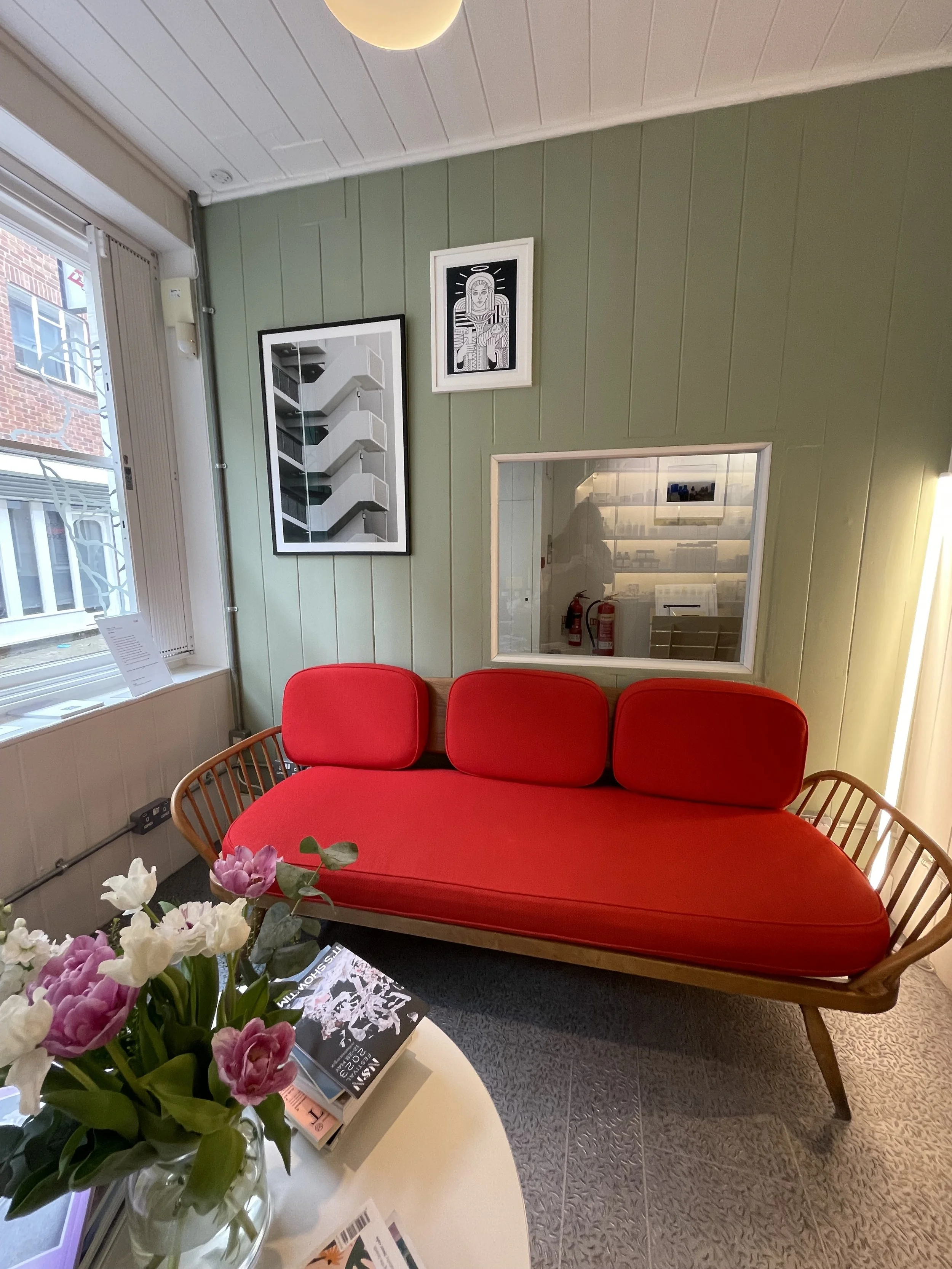
Creating calm waiting areas where possible
Training staff in neurodiversity awareness
Reviewing policies through an accessibility lens
5. What are best practices for creating a sensory-friendly salon environment?
Sensory-friendly salons aim to reduce unnecessary sensory load while maintaining a professional and welcoming atmosphere.
Best practice focuses on giving clients options rather than enforcing one ‘right’ experience.
Best practices include:
Adjustable lighting where possible
Low-volume background music or silent sessions
Unscented or low-scent product options
Clean, clutter-reduced workstations
Soft furnishings or calming textures
Clear signage and visual cues
Consistent appointment flow
6. Are there resources available to help hairdressers support neurodivergent clients?
Yes. Salon Spectrum provides a growing collection of resources designed to help hair professionals build confidence and competence in neuro-inclusive practice.
These resources focus on practical application, reflection and sustainable change.
Available resources include:
Reflective Workbook
Consultation tools and templates
Sensory preference questionnaires
Visual prompt cards
Training workshops and courses
Educational downloads and guides